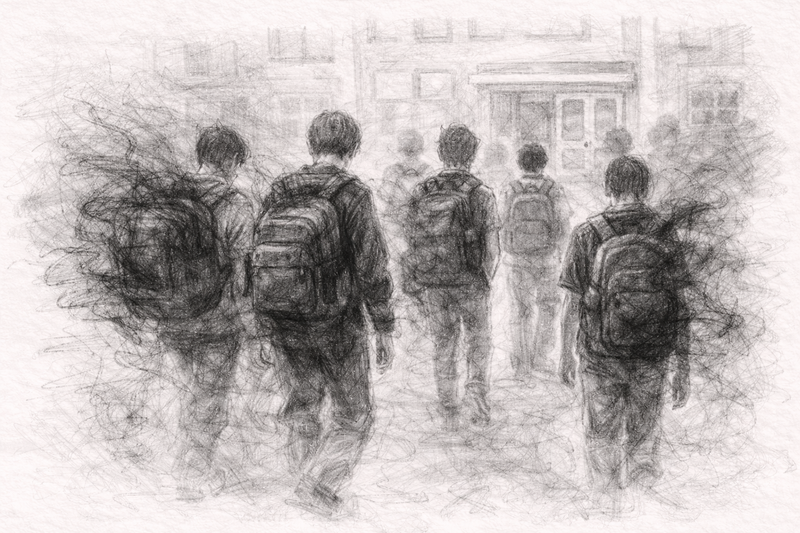
Schools are navigating a complex and rapidly changing landscape.Across Australia and internationally, educators are reporting rising challenges among boys: increased disengagement, emotional shutdown, behavioural escalation, difficulties with relationships, and growing tension around gender, respect, and identity. This is not about boys being “the problem”.
It is about boys growing up at a moment of profound cultural change — shaped by outdated expectations of masculinity, competing messages about strength and success, and a digital environment that exposes them to powerful influences long before identity is fully formed.
THE CONTEXT BOYS ARE NAVIGATING For generations, boys have been socialised to equate strength with endurance, emotional control, and self-reliance. While these traits were once adaptive in certain contexts, they often left little room for emotional literacy, vulnerability, or help-seeking.Those expectations have not disappeared. They have been reshaped — and amplified.
Online platforms now act as informal classrooms. Boys do not need to actively seek extreme content to encounter it. Algorithms routinely funnel young people from fitness, gaming, motivation, or dating advice into increasingly rigid and polarised narratives about:
power and dominance
relationships with girls and women
success, entitlement, and worth
how emotions “should” be handled
For boys who feel uncertain, disconnected, frustrated, or unseen, these messages can feel grounding. They offer certainty at a time of identity formation — but rarely provide the skills boys actually need: emotional understanding, self-regulation, empathy, responsibility, and healthy models of strength. WHAT THE DATA CONSISTENTLY SHOWS
These patterns are not anecdotal. They are well documented across education, psychology, and youth wellbeing research. Consistently, data shows that:
Boys account for the majority of behavioural incidents, suspensions, and exclusions, particularly during early and middle secondary years
Boys are significantly less likely to seek help for emotional or mental health concerns, increasing the likelihood that distress presents as behaviour rather than words
Young men are overrepresented in violent offending and justice system involvement, with patterns often emerging during adolescence
Educators report increasing exposure to rigid and adversarial masculinity narratives appearing in classroom language, peer dynamics, and attitudes toward girls
Adolescent boys report confusion about what healthy masculinity actually looks like, caught between outdated expectations and polarised online messaging
In schools, these dynamics often show up as:
disengagement and disruption
difficulty regulating emotions
resistance to authority
reduced empathy
increased peer conflict
And these impacts extend beyond school gates into families and communities. WHY THIS CANNOT BE ADDRESSED WITH DISCIPLINE ALONE When boys lack the tools to understand and regulate what is happening internally, the impact rarely stays internal. Unprocessed stress and emotional suppression often surface as:
withdrawal or shutdown
reactivity and anger
controlling or defensive behaviour
difficulty respecting boundaries
challenges forming healthy relationships
Addressing this is not about lowering expectations or excusing behaviour. It is about strengthening the internal capacities that allow boys to meet expectations responsibly.
WHY THIS WORK IS NECESSARY — AND DIFFERENT Many school responses are necessarily reactive: discipline processes, policy enforcement, or one-off wellbeing sessions that address symptoms rather than underlying drivers.This work is preventative and developmental. It focuses on building:
emotional literacy
nervous system regulation
identity and values clarity
responsibility and self-leadership
belonging and purpose
Across decades of behaviour change research and real-world practice, one principle holds consistently: When boys feel they matter, understand themselves, and experience belonging, behaviour changes. This is not ideology. It is what works — in schools, communities, and high-risk environments.
WHY SCHOOLS TRUST THIS APPROACH
This work has been developed through more than two decades of designing and delivering programs in settings where outcomes mattered and superficial solutions failed — including youth justice, custodial environments, gang diversion, and education.In those contexts, lasting change did not come from fear, control, or punishment.
It came from:
understanding the internal drivers of behaviour
building self-regulation and responsibility
restoring purpose and a sense of belonging
That learning has been translated into developmentally appropriate, school-ready programs that meet boys where they are — without shaming, lecturing, or minimising impact.
WHAT WE OFFER SCHOOLS Schools can engage with this work flexibly, depending on need and capacity. Whole-School Talks
Age-appropriate sessions for boys that:
explore identity, masculinity, and online influence
build emotional language and self-awareness
promote responsibility and respectful relationships
resonate without preaching or moralising
CPD Workshops for StaffProfessional learning that supports educators to:
understand emerging cultural influences on boys
respond to behaviour through a trauma-aware lens
build consistent language around regulation and responsibility
feel more confident supporting boys in real-world situations
Parent Information SessionsNon-judgemental sessions that help parents:
understand what boys are navigating
recognise early signs of disconnection
communicate in ways that protect relationships
respond to online influence without escalation
Unlocked: Your Real StrengthA structured program for Years 7–10, delivered either directly or through a train-the-trainer model.Includes:
student workbooks
teacher and parent guides
curriculum-aligned content
practical exercises and reflection tools
The program equips boys with language, self-leadership skills, and a grounded model of strength — before harmful narratives take hold.
A PREVENTATIVE INVESTMENT IN SCHOOL CULTURE Working with boys at this stage is not a “nice to have”. It is a preventative investment in:
safer classrooms
stronger relationships
reduced behavioural escalation
improved engagement and learning
healthier community culture
Schools that address identity, belonging, and emotional regulation early are not only supporting individual students. They are shaping the men those boys will become.